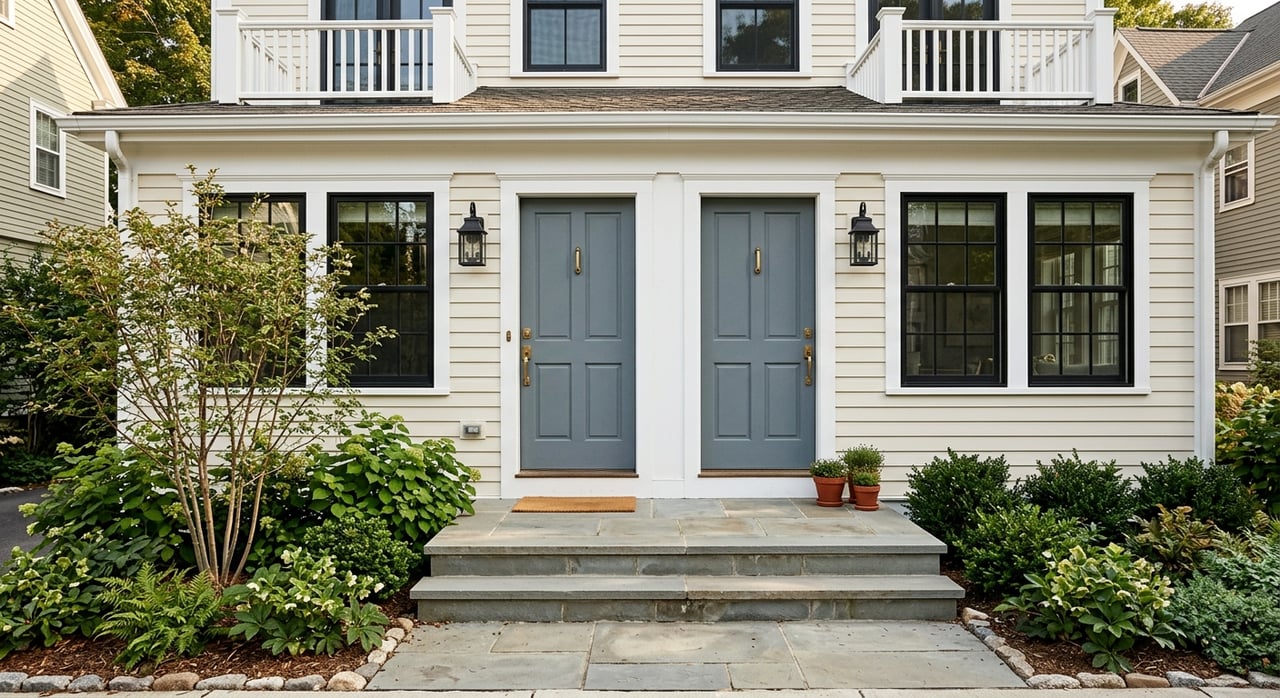
If you’re buying your first home and deciding between Cambridge and Somerville, you’re probably weighing the same three questions most buyers ask right away: How far will your budget go, what kind of home can you actually get, and which city will feel like the better fit day to day? It’s a smart comparison because both cities offer walkability, transit access, and strong housing demand, but they are not interchangeable. When you understand the price gap, housing mix, and neighborhood patterns, it becomes much easier to see where you may have the best path to ownership. Let’s dive in.
Cambridge vs. Somerville at a glance
For many first-time buyers, the biggest difference comes down to entry price. Cambridge carries a clear premium, especially for condos and multi-family properties. Somerville is still expensive by any normal standard, but it usually offers a lower bar to entry.
That does not automatically make Somerville the better choice for everyone. Cambridge tends to offer a tighter urban core, a highly established market, and steady demand. Somerville often gives you more room to work with financially, along with neighborhoods that can vary more block by block and station by station.
Condo prices for first-time buyers
If you are shopping for a condo, Somerville is usually the more affordable place to start. Cambridge reported a 2024 median market-rate condo sale price of $870,000, and its Q4 2025 condo market report showed a median sale price of $890,000, up 7.2% year over year. In Somerville, the Q4 2025 condo median sale price was $764,000, and the city’s FY26 property tax update listed the average condominium value at $775,675.
In plain terms, that means Cambridge condos generally cost more, and not by a small amount. For a first-time buyer, that price gap can affect everything from your down payment target to your monthly payment and the amount of flexibility you have when competing in a fast market.
What the condo price gap means
A lower entry price can create more breathing room. You may be able to preserve cash for closing costs, future updates, or reserves instead of stretching every dollar just to get in the door. That matters in markets where inventory is limited and homes can move quickly.
Cambridge, on the other hand, may appeal if you want that specific location and are prepared for the higher cost. The city’s recent pricing and assessment data suggest that demand has remained durable even with higher interest rates and limited inventory.
Multi-family options are very different
Some first-time buyers look at two-family or three-family homes as a way to offset housing costs with rental income. That strategy can work, but the numbers are very different in Cambridge and Somerville. In Cambridge, the 2024 median market-rate sale price was $1,542,500 for two-family homes and $1,822,500 for three-family homes.
Somerville’s FY26 average values were lower at $1,193,941 for two-family homes and $1,474,682 for three-family homes. These are not identical data types, since Cambridge reports median market-rate sale prices and Somerville reports assessment averages, so the comparison is directional rather than exact. Still, it shows a sizable Cambridge premium in both categories.
Why this matters for first-time buyers
For most first-time buyers, a multi-family purchase is not just a bigger version of a condo purchase. It often requires a larger down payment, stronger reserves, and comfort with maintenance, renovation planning, or landlord responsibilities. That is true in both cities, but Cambridge makes the financial leap even bigger.
If you are thinking about owner-occupying a multi-family, Somerville may be the more accessible option. It is still a high-cost play, but it may offer a more realistic path if you want to live in one unit and use rental income to help offset your monthly costs.
Walkability and transit are strengths in both cities
You do not have to give up convenience in either location. Cambridge has a Redfin Walk Score of 90, and the city reports 27 MBTA bus routes, one commuter rail station, and six stations on the Red and Green Lines. That gives buyers multiple ways to get around without depending heavily on a car.
Somerville is right there with it, with a Redfin Walk Score of 89. The city says the Green Line Extension and Community Path are open, that five new T stations were added in Somerville, and that 85% of residents are now within a half-mile of a subway station.
The transit difference is more about feel
Cambridge has long been known as a deeply connected urban market with strong transit options. Its mix of buses, subway service, commuter rail access, and mixed-use areas can make it especially attractive if you want a very established car-light lifestyle.
Somerville has become a much stronger transit city than many buyers still assume. With the Green Line Extension in place and station-area growth shaping several parts of the city, your home search may feel more neighborhood-specific, especially around places like Union Square, East Somerville, Gilman Square, Magoun Square, and Ball Square.
Housing stock feels different in each city
Beyond price, the two markets have distinct housing patterns. Cambridge has a more institutional and mixed-use housing environment than many nearby cities. According to the city, 25.1% of residents are enrolled in college or graduate school, 14.0% of the population lives in group quarters, 66.5% of occupied housing is renter-occupied, 27.6% of dwelling units are condominiums, and 14.5% are in mixed-use buildings.
The city also reports that 34.1% of dwelling units are in properties with more than 100 units. For a buyer, that can translate to a market shaped by universities, major employers, transit hubs, and large residential buildings, along with more traditional neighborhood housing.
Somerville reads differently. The city’s FY26 property tax update says 81.3% of Somerville properties are residential. In practical terms, that can make the search feel more grounded in neighborhood patterns and street-level housing choices, even while transit and development continue to reshape certain areas.
What that means for your search
If you picture yourself in a market with a stronger urban core and a broader mix of large-scale residential and mixed-use settings, Cambridge may feel more aligned. If you want a search experience that feels more neighborhood-by-neighborhood, Somerville may offer that more clearly.
Neither is better in every case. The right fit depends on whether you care most about a specific address, a certain housing type, or how far you can stretch your budget without sacrificing your day-to-day lifestyle.
Appreciation potential and long-term outlook
First-time buyers often want to know not just what they can afford today, but how the purchase may hold up over time. Based on city data, Cambridge looks like the more established and lower-volatility option. The city’s FY26 tax letter says residential markets have held steady despite high interest rates and limited inventory, with mostly positive year-over-year movement in condo, two-family, and three-family assessments.
Somerville also shows strong momentum, but the pattern appears more location-specific. The city’s FY26 property tax update says total taxable value rose 5.3%, residential value rose 5.9%, and average values increased year over year for condos, two-family homes, and three-family homes.
Where Somerville may offer more upside
Somerville’s update notes that some of the largest condominium valuation changes were concentrated in Winter Hill, Ten Hills, and Central, Spring, and Prospect Hill. That suggests appreciation may not be uniform across the city. For buyers, that can mean more need for careful neighborhood-level analysis, but it can also point to areas where change and transit access may create opportunity.
A fair way to think about it is this: Cambridge often offers the stronger price floor and a deeply established market position, while Somerville may offer more room for a buyer to benefit from neighborhood change, renovation, or transit-led growth. That is not a guarantee of future returns, but it is a useful framework for comparing the two.
Which city fits your first purchase?
If your budget is the biggest constraint, Somerville will usually give you more flexibility. That is especially true if you are deciding between stretching hard for a condo in Cambridge or buying a condo in Somerville with a bit more breathing room.
If your top priority is owning in Cambridge and you can comfortably afford the premium, the city offers a highly competitive market with strong demand and a well-established reputation. You are likely paying more for that access, but some buyers decide the location and market stability are worth it.
A simple way to choose
Here are a few practical ways to frame the decision:
- Choose Cambridge if you want a more established urban market, can handle the higher price point, and value a location with a strong long-term demand base.
- Choose Somerville if you want a lower condo entry price, more flexibility in your monthly budget, or a more realistic shot at an owner-occupied multi-family.
- Focus on specific neighborhoods and housing types if transit access, layout, or renovation potential matter more to you than city lines.
- Stay realistic about pace in both markets, because neither city is a bargain hunt for first-time buyers.
Final thoughts for first-time buyers
The best choice is not about which city is objectively better. It is about which city gives you the strongest combination of affordability, lifestyle, and long-term comfort with your monthly costs. For some buyers, that means paying more to be in Cambridge. For others, it means buying into Somerville and keeping more flexibility for the years ahead.
If you want help comparing actual listings, weighing condo versus multi-family options, or building a strategy for a competitive offer, working with a local advisor can save you time and reduce stress. A smart first purchase starts with a clear plan, not just a saved search.
If you’re ready to map out the right first-home strategy in Cambridge or Somerville, schedule a free strategy call with Colleen Kelly.
FAQs
Is Cambridge or Somerville cheaper for first-time homebuyers?
- Somerville is usually the lower-cost entry point, especially for condos, while Cambridge generally carries a clear price premium.
Are condos more common for first-time buyers in Cambridge and Somerville?
- Yes. Based on pricing in both cities, condos are generally the more accessible first purchase compared with two-family or three-family homes.
Is a multi-family home realistic for a first-time buyer in Cambridge or Somerville?
- It may be possible, but multi-family homes in both cities are expensive. Somerville is generally more accessible than Cambridge for owner-occupant buyers considering that path.
Do Cambridge and Somerville both offer strong public transit access?
- Yes. Both cities are highly walkable and transit-rich, with Cambridge offering extensive bus and rail access and Somerville benefiting from the Green Line Extension and expanded station access.
Is Cambridge or Somerville better for long-term value?
- Cambridge appears to offer a more established, lower-volatility market, while Somerville may offer more neighborhood-specific upside tied to location, transit, and housing changes.
How should a first-time buyer choose between Cambridge and Somerville?
- Start with your budget, then compare housing type, transit needs, and how much monthly flexibility you want after closing. That usually makes the right fit much clearer.